|
国鑫GX1213L 1200–1300MHz L波段低噪声放大变频器LNB

收藏
商品说明
国鑫GX1213L 1200–1300MHz L波段低噪声放大变频器LNB
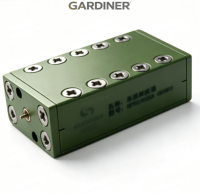
产品概述深圳市华视数码科技有限公司推出的GX1213L L波段低噪声下变频器,专为信号接收、射频测试测量场景研发,设备集成低噪声放大器与下变频模块,可将1200–1300MHz射频信号下变频至20–120MHz中频信号。产品具备≥45dB稳定转换增益,支持30dB动态增益调节范围、1dB精准步进调节,搭载RS232/RS422/RS485多制式远程控制接口,射频端口采用50Ω标准SMA-K接口。设备体积小巧、集成性强,适配地面站前端、频谱监测、微弱信号接收、链路增益校准等通用场景,同时可深度适配航空航天、无人机无线传输、空地一体化数据传输等特种作业场景,为高空、远距离、弱信号传输场景提供稳定可靠的射频信号处理支撑。 核心技术参数
产品核心特性高增益低噪声设计:设备在保障≥45dB高转换增益的同时,将噪声系数控制在2dB典型低值,大幅提升微弱信号传输链路余量,有效解决航空、无人机远距离传输中的信号衰减、信噪比不足问题,适配弱信号精准接收场景。 高精度增益调控:支持30dB宽范围增益调节与1dB精细化步进调校,可根据系统链路损耗、传输距离动态优化整机增益,精准适配不同工况下的系统动态范围,满足航空航天高精度信号校准需求。 工业级高稳定性:实现0.2dB/10分钟的超低增益波动,支持24小时不间断连续稳定工作,可适应高空温差、电磁干扰复杂环境,适配各类高稳定性要求的测控、传输系统。 宽输入信号适配性:兼容-68dBm~-38dBm大范围输入信号功率,可匹配前置衰减器、放大器等各类前端设备,适配无人机、航空设备多变的信号输出强度,系统兼容性极强。 强信号驱动能力:输出1dB压缩点≥+17dBm,具备优异的带载能力,可稳定驱动后端射频设备及长距离线缆传输,有效降低长线传输信号损耗,保障空地远距离传输稳定性。 多接口智能管控:搭载RS232/RS422/RS485多制式远程控制接口,可无缝对接网管系统、自动化测试平台、机载测控系统,支持远程增益调节、设备状态读取、故障告警,实现智能化无人值守管控。 小型化易集成:紧凑化结构设计,轻量化机身可快速集成于无人机机载设备、航空机载射频模块、地面便携测控终端,不占用过多安装空间,适配移动作业设备轻量化需求。www.szwisi.com 核心应用场景(含特种场景)通用场景适用于L波段卫星通信地面站前端、远距离微弱信号接收、射频频谱监测与分析、无线链路预算优化、AGC/ALC前置放大系统、工业射频测试测量等场景,可有效优化链路传输质量,提升系统信号接收灵敏度与稳定性。 特种航空航天场景依托L波段远距离传输、低功耗、抗干扰的频段优势,设备可广泛应用于各类高端特种传输场景,完美适配航空航天、无人机作业工况。在无人机传输领域,可适配高空长航时无人机、工业巡检无人机、测绘无人机的空地数据链传输,支撑无人机高清影像、测绘数据、测控指令的远距离稳定收发,有效提升非视距传输距离与信号抗干扰能力。在航空航天领域,可应用于航空机载卫星导航信号接收、飞行器测控通信、航天设备地面测试、空地一体化通信链路搭建,适配高空低温、强电磁干扰、高速移动传输等复杂工况,为航空航天测控、无人机集群通信、空地协同传输提供核心射频信号处理支撑。 接口与供电说明设备射频端口统一采用50Ω阻抗SMA-K标准接口;远程控制接口适配RS232/RS422/RS485三种制式,配套屏蔽双绞线(STP)接线使用,需做好设备接地处理,规避电磁干扰影响通信稳定性。设备供电规格、功耗参数以设备铭牌及官方通信协议为准,远程增益调节、设备状态回读等功能,需搭配上位机或工控主机配套使用。 安装调试与使用建议增益调试:根据后端接收机输入量程及后续模块噪声参数,调节中频增益,确保整机链路工作在线性区间,再通过1dB精细化步进微调,平衡系统载噪比与信号失真度,适配不同传输距离与信号强度工况。 输入信号管控:严格控制前端输入信号功率在-68dBm~-38dBm范围内,避免信号功率过高导致设备压缩失真、功率过低引发信噪比不足,可根据实际工况增减前置衰减器优化信号强度。 线缆匹配与布线:全程采用低损耗50Ω同轴电缆,尽量缩短布线长度;所有接口需紧固安装并做好防水、防氧化、防电磁屏蔽处理,减少信号反射与插入损耗,保障高空、户外移动作业稳定性。 设备运维监控:通过RS232/RS422/RS485接口实时读取设备工作状态、故障告警信息,严格按照设备手册配置通信地址、波特率、校验位等参数,保障远程管控、数据传输精准稳定。
GX1213L 1200–1300 MHz L-Band Low-Noise Block Downconverter (LNB) Product Overview Developed by Shenzhen Huashi Digital Technology Co., Ltd., the GX1213L is a high-performance L-band low-noise block downconverter designed for weak signal reception, RF testing, and precision measurement applications. Integrated with a low-noise amplifier (LNA) and high-stability downconversion chipset, this module converts 1200–1300 MHz RF signals to 20–120 MHz IF output signals. It provides a minimum conversion gain of 45 dB, supports a 30 dB wide-range gain adjustment with precise 1 dB step resolution, and adopts multi-mode remote control interfaces including RS232/RS422/RS485. The RF port adopts standard 50 Ω SMA-K connector. Featuring compact structure, low noise, and high stability, the unit is widely applicable to ground station frontends, spectrum monitoring, weak signal acquisition, and link gain calibration. It is also highly suitable for aerospace systems, UAV data transmission, and air-ground integrated communication links, delivering reliable and high-precision RF signal processing for long-distance and complex electromagnetic operation scenarios.www.szwisi.com Key Specifications
Product Features • High Gain & Ultra-Low Noise: Maintains a high conversion gain of ≥45 dB with a typical noise figure as low as 2 dB, effectively improving the link margin for weak signal reception. It greatly compensates for signal attenuation and insufficient signal-to-noise ratio in long-distance UAV and air-ground transmission. • Precision Gain Tuning: Supports 30 dB wide dynamic gain adjustment and 1 dB fine stepping tuning. The system gain can be dynamically optimized according to link loss and transmission distance to maximize system dynamic range, meeting high-precision calibration requirements for aerospace communication systems. • Industrial-Grade Stability: Features ultra-low gain fluctuation of 0.2 dB per 10 minutes, supporting 24-hour continuous stable operation. It adapts to harsh operating environments with high and low temperature changes and strong electromagnetic interference in high-altitude scenarios. • Wide Input Signal Compatibility: Covers an input power range of -68 dBm to -38 dBm, compatible with various front-end attenuators and amplifiers. It stably adapts to variable signal output power from UAVs and airborne communication devices. • Strong Output Driving Capability: The output 1dB compression point reaches ≥+17 dBm, providing powerful load capacity to drive subsequent RF modules and long-distance cable transmission, reducing line loss and ensuring stability for long-range air-ground data links. • Multi-Interface Remote Management: Equipped with universal RS232/RS422/RS485 serial interfaces, seamlessly connecting with network management systems, automatic test equipment, and airborne measurement and control terminals. It supports remote gain adjustment, real-time status monitoring, and fault alarm feedback for intelligent unmanned operation. • Miniaturized & Easy Integration: Adopts a compact and lightweight structural design, which can be easily integrated into UAV airborne payloads, aerospace RF modules, and portable ground measurement terminals, saving installation space and adapting to lightweight mobile device requirements. Typical Applications General Applications Suitable for L-band satellite communication ground station frontends, long-distance weak signal reception, RF spectrum monitoring and analysis, wireless link budget optimization, and AGC/ALC pre-amplifier systems. It effectively improves receiving sensitivity and overall system stability for industrial RF test and measurement scenarios. Aerospace & UAV Special Scenarios Benefiting from the long transmission distance, low power consumption, and anti-interference advantages of the L-band, this LNB is widely used in high-end special communication fields such as aerospace and air-ground transmission. For UAV systems, it supports high-altitude long-endurance UAVs, industrial inspection UAVs, and surveying and mapping UAVs, realizing stable long-distance transmission of high-definition video, mapping data, and measurement and control commands, and improving non-line-of-sight communication capability and anti-interference performance. For aerospace applications, it can be applied to airborne satellite signal reception, aircraft TT&C (Tracking, Telemetry and Command) communication, aerospace ground testing, and air-ground integrated link construction. It adapts to complex operating conditions including high altitude, low temperature, strong electromagnetic interference, and high-speed mobile transmission, providing core RF signal processing support for aerospace measurement and control, UAV cluster communication, and air-ground collaborative transmission systems. Interface & Power Supply Instructions The RF port adopts standard 50 Ω SMA-K connector. The control interface supports RS232/RS422/RS485 and needs to be wired with shielded twisted pair (STP) and reliably grounded to avoid electromagnetic interference affecting communication quality. The power supply specification and power consumption refer to the equipment nameplate and official communication protocol. Remote gain adjustment and status readback functions require matching upper computer or industrial control host. Setup & Debugging Guidelines • Gain Configuration: Adjust the IF gain according to the input range of the rear receiver and the noise floor of subsequent modules to ensure the entire link operates in the linear region. Fine-tune in 1 dB steps to balance carrier-to-noise ratio (C/N) and signal distortion for different transmission distances and signal strengths. • Input Signal Control: Keep the input signal power within -68 dBm ~ -38 dBm to avoid signal compression distortion caused by excessive power or poor signal-to-noise ratio caused by insufficient power. Add or remove front-end attenuators according to actual working conditions. • Cabling & Impedance Matching: Use low-loss 50 Ω coaxial cables and minimize cable length. Fasten all connectors firmly and take waterproof, oxidation-proof and shielding measures to reduce signal reflection and insertion loss, ensuring stability for high-altitude and mobile outdoor operation. • Monitoring & Control: Read device operating status and fault alarms in real time via RS232/RS422/RS485 interface. Configure communication parameters such as device address, baud rate, and parity bits in accordance with the official manual to ensure accurate remote control and stable data transmission.
相关商品
|